
There is no denying that buying things inside video games has gotten complicated. You spend real money, you get something on screen, and then one day the company decides the servers are not worth keeping on – and that thing is gone. Not stolen, not broken. Just gone, because the agreement you clicked through without reading always said this could happen.
Square Enix switched off the Marvel’s Avengers servers on November 21, 2025. Players had been putting money into that game for three years: skins, gear, cosmetics. The company ran the numbers, decided the servers cost more than they brought in, and that was that. Game Rant has been tracking these closures and has counted 52 in the first half of 2026.
Naturally, players started to find this out the hard way.
What You Actually Own in a Normal Game
XDefiant opened in May 2024. Seven months later, Ubisoft shut it down. Some players got partial refunds. Others did not. Nothing in the law required either outcome – Ubisoft just chose to offer something. The Simpsons: Tapped Out ran for twelve years before it closed, taking hundreds of dollars worth of items with it that some players had been collecting since the game first came out. Petitions went up online. Nothing came of them.
The thing players own in these games is a license. One the company can end whenever the numbers stop working out for them. Most players do not find this out until the day it actually happens.
The market for games built differently was worth $13 billion in 2024. Research and Markets put the 2030 figure at $301 billion in its July 2025 report, with growth of roughly 69% per year. That growth picked up right around the time shutdowns became regular news, not when the underlying technology improved, which says something about what is actually driving it.
How the Other Kind Works
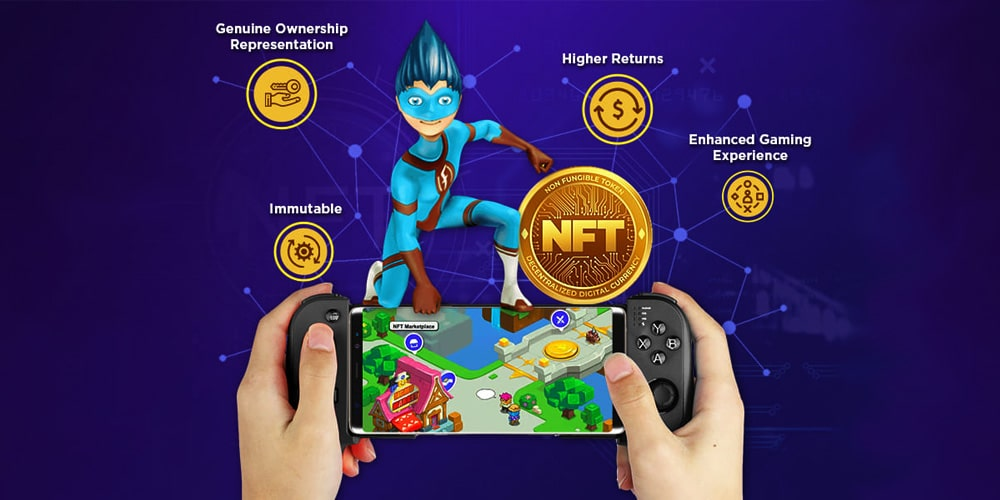
When you earn or buy something in this kind of game, it is recorded on a distributed ledger spread across thousands of computers in different countries. That record is linked to your own wallet, not to the game company’s server. The studio is closing. Your wallet still has the item. You didn’t need their servers to work in the first place.
Axie Infinity has made over $1.3 billion in total sales. Players who had items with the company during its hard times in 2022 and 2023 kept everything while the studio got itself sorted. The items were not on the company’s servers. When things went wrong at the company, the items were simply unaffected.
If you change any information in that record, you also have to change every other record that comes after it, in every single copy, at the same time – all at once, across thousands of machines. The cost of doing that makes it something that, in practice, just never happens. That is why 80% of U.S. gamers told CoinLaw in 2025 they wanted to be able to pay for games with crypto. Not because they follow blockchain news. Something you can sell back is worth more than something that disappears when someone at a studio makes a budget call.
The Money Question Nobody Mentions
In a normal game, you cannot sell the rare item you spent 200 hours getting. The studio won’t allow it because that would mean competing with their own store. You are trapped inside their walls every hour. The only way to get anything out is to put more money in.
These games work oppositely. The item sits in your wallet. You list it; another player buys it; the sale goes through within minutes, and the studio doesn’t get anything. CoinLaw reports that tokenised assets accounted for 42% of total revenue in this area in 2025. Secondary sales account for between 20 and 25% of what a typical player takes home over their time on a platform. Players are also willing to pay 25% more for items with genuine resale rights – not because they are excited about the technology, but because the ability to get money back later is worth something real.
Two hundred hours of work can now pay off outside the game. That wasn’t true in the past.
Who Has a Say in What Changes
In a normal game, the studio decides everything. Things like how often things drop, how they work, and what gets built and taken away. If players don’t agree, they can post about it on social media and hope someone at the company sees it. That is, more or less, the complete list of options.
These games give token holders a real vote, and the result is decided by the code rather than by someone at the company. Yield Guild Games works like this – people vote on which games to support, how the rewards are shared out, and where the money gets spent next. The number of active wallets on Ronin rose 55% in the third quarter of 2025, reaching around 419,000. This is partly because people like having their say and want to stick around even when an update doesn’t work out the way they hoped. People who feel like they have a stake in something tend to stick around. You can see this in the data.
Why Betting Works the Same Way
A standard betting operator holds your money, sets the terms, and approves withdrawals. They can restrict your account before a large payout without an explanation that satisfies you. Experienced bettors factor delayed withdrawals and account restrictions in as something that sometimes just happens – which says something about the industry’s track record on this.
Dexsport Casino applies the same idea to sports wagering. A smart contract holds your funds while a bet is running. Independent data pulls the result from outside. Once it is in, the payout goes out on its own – nobody at the company needs to do anything, and there is no waiting period. The rules are in the contract before you place the bet and are visible to anyone who wants to look at them.
Nobody can override the contract once it is running. That is not a feature. That is just what the word means.